

How to Break the Loop
A guide to escaping the numbness that keeps us scrolling while our neighbors disappear

I’ve been spending the past few weeks feeling like I’m stuck in a loop. I scroll down my feed past Gaga memes, used couches, and recorded abductions. I see the video of another raid — always another video — and my body clenches before my mind can catch up.
Maybe you know the feeling too? A heat in your face. A tightness in your throat. And then, because you have trained yourself well, you keep scrolling. You put the phone down. You pick it up again. You tell yourself there is nothing you can do. You tell yourself it is happening somewhere else, to someone else, and that the distance between you and the disaster is too vast to cross.
We’re all caught in a loop and the only way out is to break the inertia of our daily lives together.

The streets are as quiet as I’ve ever seen them when it happens.
I am driving to a community event when I see a man darting around the corner of Sunset and Echo Park Avenue. Four men in vests rush after him. They get him in an alley where they tackle him to the ground. I have my camera open and recording before I can even see them. Another white SUV blocks my view. I drive around it. They are dragging him to the car when his body goes limp and they have to shove him inside.
I call out for his name but my voice is lost in the space between us.
This is something I will think about for a long time. How I was close enough to see his face but too far to reach him. How my voice traveled through the morning air and arrived nowhere.
When they drive away, I feel an electricity through my body that makes it hard to keep my hands on the wheel. I report the incident like I’ve been taught — sending the footage to a friend who passes it along to the ICE watch. Within minutes, my video is circulating in group threads and Instagram pages.
This is how a man disappears in Los Angeles. Witnessed and shared and liked and reposted — and still, somehow, a feeling of powerlessness.
Echo Park is a neighborhood where many people live but few can stay. Its proximity to Dodger Stadium, its trendy coffee shops, and $17 cocktails make it a place where people come to work or have a good time and leave afterward. Those like me who are able to remain here compete in a rental market remade for an influx of creative-class gentrifiers (like me) who can pay three times what the previous tenants could.
This juxtaposition of worlds is sharp today. The morning abduction is still pulsing through my body, and my fellow neighbors seem to be proceeding with their sunny Sunday routines. At the park, men cluster to discuss their film projects. A woman walks her dog past the alley where, two hours ago, a man’s body went limp.
My fellow organizers have been patrolling this neighborhood for ICE every single day for eight months. They drive a route. They look for suspicious vehicles. They report to a network that can mobilize a rapid response. This morning, after the abduction, the patrols have multiplied. They drive with their windows rolled down, chanting over a megaphone in Spanish and English:
ICE is here. They have taken someone. Take cover.
Just a few blocks north of where the man was dragged into the car, the patrol passes my friend sitting outside Canyon Coffee with other creatives immersed in lattes and laptops and the soft glow of their screens. When they hear the message crackling through the megaphone, a man next to my friend drops his notebook and says:
“Fuck. Things are really bad, aren’t they?”
He picks up his notebook and keeps writing.
This is what the anthropologist David Graeber calls a lopsided structure of imagination.
In such structures, one group has no choice but to understand the rules of the system intimately. They must learn it, navigate it, strategize within it, every single day, in order to stay alive. Their imagination is consumed by survival: How do I make rent? How do I get my children to school without being seen? How do I come home tonight?
The other group — protected by papers, by pigment, by the luck of where they were born — gets to remain in comfortable oblivion. They get to do the other kind of imaginative work: designing things, making films, reading and writing essays like this one.

The border between the two runs through me.
I am Latino. But I have accumulated power through my citizenship, my skin tone, my education, my gender, my family’s slow climb into safety. Because of this proximity, I was handed a map to a world that promised, if I followed it correctly, I would finally arrive somewhere good.
By all accounts, I have arrived. I am my ancestors’ wildest dream.
So why do I still feel like I am running a loop that never ends? And why does this loop make it feel so impossible to act on the violence happening over there—two blocks away, in the alley, on the screen?
I’ve come to believe these two phenomena are not separate. They are the same system, seen from different angles.
The violence that happens over there is made possible by a population over here that has been lulled into silence. We are numbed. We feel too overwhelmed to act, too fragile to risk what we have built. We are absorbed in the inertia of a comfortable life that feels too precious to gamble with.
And this arrangement serves a purpose. It turns those on the other side into aliens, criminals, into cautionary tales, into the specter of what happens when you fail to follow the rules. It keeps the rest of us in line through the quiet threat of falling.
But none of us escape unscathed. No matter how lopsided the consequences or risk, we are all suffering. We were promised that these lives would bring good feelings. Safety. Satisfaction. Arrival. And instead we got a loneliness so vast it has become the background noise of an entire generation.
We are all entangled in a fabric that profits from our separation. In this fabric, our imaginations are consumed. Those at the bottom are consumed by survival — evading, protecting, strategizing. Those at the top are consumed by a trillion-dollar machine designed to hijack attention, pump us with dopamine, offer little rewards of capital and memes and concert tickets that are meant to convince us we have made it but leave us feeling empty.
The algorithms that feed on our attention. The platforms that profit from our rage. The frictionless interfaces that let us glide through days without touching anyone. The private homes, the private screens, the private selves. The compounded loneliness, despair, boredom, and anger are all canaries in the coal mine.
It requires your cooperation. It requires you to keep scrolling, keep isolating, keep believing that the wall between you and your neighbor is natural, inevitable, too thick to breach.
You are not safe. The system that tears immigrants from our streets is the same system that has split you into little boxes, little algorithms, little loops. It profits from your estrangement. It feeds on your attention. It needs you to believe that the only option is to keep scrolling.
You can try to fill the void with more friends, more content, more money. But the source remains. Your body is telling you that something is wrong. It’s not your fault – it’s just what you have been asked to accept.
But the moment you stop cooperating — even for an hour, even for a single conversation — you might be able to neutralize the machinery.
There are two paths forward.
We can continue as we are: the most vulnerable waging a defense alone, strategizing against enclosure, while those of us with power dissolve into entertained convenience.
Or we can do something else.
We can put our minds and bodies and voices together into the work of weakening the walls that separate us. We can build alliances between those closest to the problem—who know it most intimately, who have had to fight it most fiercely—and those of us who straddle worlds, who feel the weight of the machine but have not yet figured out how to resist it.
Many of us also feel this machinery running through our bodies. Many, like me, may feel themselves torn between the violence and the false utopias of privacy pushed onto us for our compliance. The future of the world lies with us and our willingness to resist the numbing loops and let our feelings bring us together.
“We must make our freedom by cutting holes in the fabric of this reality, by forging new realities which will, in turn, fashion us. Putting yourself in new situations constantly is the only way to ensure that you make your decisions unencumbered by the inertia of habit, custom, law, or prejudice—and it is up to you to create these situations.
Freedom only exists in the moment of revolution. And those moments are not as rare as you think. Change, revolutionary change, is going on constantly and everywhere–and everyone plays a part in it, consciously or not.”
– Crimethinc collective
When I feel consumed by the system, I return again and again to this quote which reminds me that new worlds are constantly emerging in the smallest acts.
We wait for the grand rupture — the collective disaster that finally shakes everyone awake. The revolution, the pandemic, the murder on camera. And yes, these ruptures come. They shake us. For a little while, the walls become visible. People flood the streets and get trained.
But we do not always have to wait for disaster. Instead, we might tear a hole in the fabric of this reality that separates you and me.
This new world is already emerging.
If you’d like to steward it yourself, consider any of the following small actions:
⊹ Go on a walk you have never taken. Avoid your usual route and pick a different one. Get a little lost. Don’t be afraid to say hi to someone you pass. Let your body feel the strangeness of not knowing what comes next.
⊹ Call someone you have been meaning to call. Ask them, honestly, how they are. And then—this is the hard part—listen. Listen without planning what you will say. Listen like their voice is crossing a great distance to reach you.
⊹ Sit with a feeling you have been avoiding. Don’t try to fix it or meditate it away. let it remain. Feel it in your chest, your throat, your hands. Discover that it will not kill you. That it is, in fact, information. That it is telling you something about the world and your place in it.
⊹ Show up somewhere new. A community meeting. A neighbor’s door. A rally you only half-understand. Show up without knowing what will happen. This is what it means to be available to the world.
These are small, deliberate tears in the fabric that has been wrapped so tightly around you.
And they are practice for the larger tears to come.
It begins with a single cut.
It begins with us.
One more thing.
The street vendors in my neighborhood are among the most vulnerable right now. Some have already been taken. Many are in hiding, unable to work, unable to feed their families.
There is a fund to support them run by organizers who were doing this work before the cameras came and will keep doing it long after the news cycle moves on.
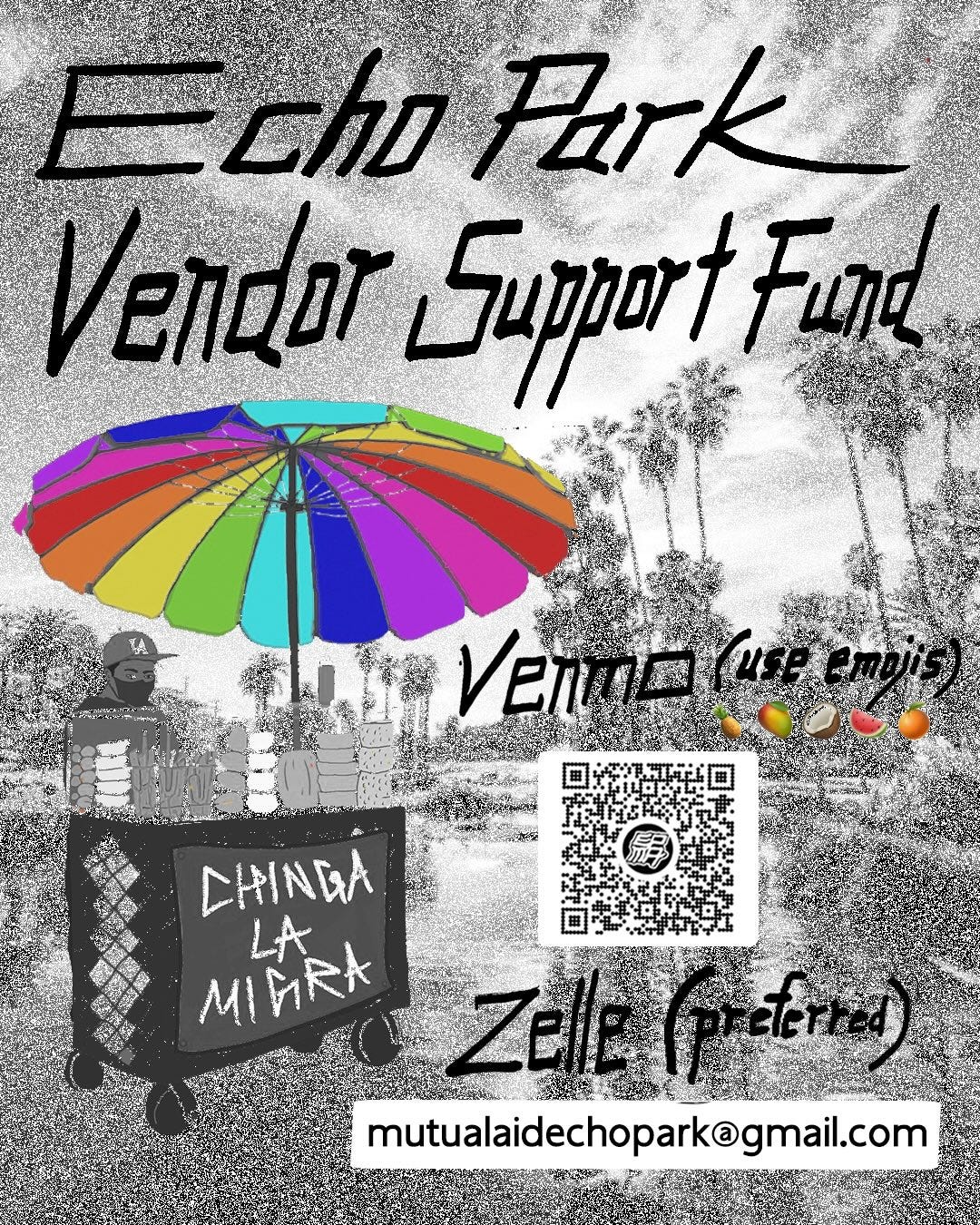
If you have money, give it. If you don’t, share the link. If you can do neither, find the vendors in your own neighborhood. Buy something. Learn their name.
This is my favorite one of yours, albeit in response to a horrific incident. Thank you for thoughtfully analyzing the risk of us seeing what is happening as distinct from us